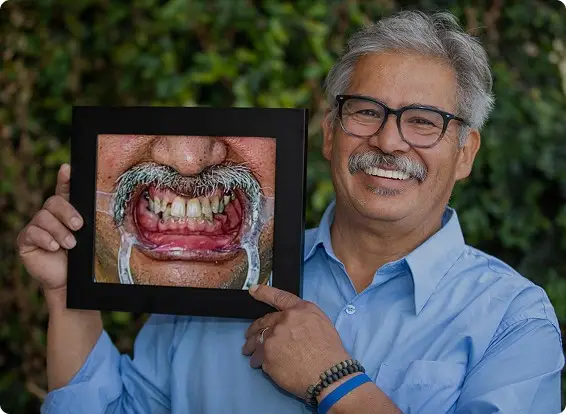
Bone Grafting for Dental Implants in Downey, Even If You’ve Been Told No
If you were told you don’t have enough bone for dental implants, that conversation may not be over. Many patients who were turned away are still treatable, and Dr. Sanjabi handles bone grafting in-house so you don’t need to go anywhere else.
When standard dental implants aren’t an option, he also has extensive experience with advanced techniques, including zygomatic, pterygoid, and transnasal implants, also handled in-house.
When a tooth comes out, the bone that used to hold the root starts to shrink. It happens gradually, but it adds up over time. The longer a gap has been there, the more bone may have been lost.
Gum disease can also wear bone away. So can wearing a full denture for many years, because the bone under it slowly wears away without tooth roots to stimulate it.
By the time someone is ready for dental implants, the bone that was there when the tooth was lost may no longer be sufficient to support an implant post. That’s why a previous provider may have said no.
A bone graft adds volume back to areas where bone has been lost. The material, which may come from your own bone or a processed donor or synthetic source, is placed at the implant site and gives your body a scaffold to rebuild around.
Over time, your body builds new bone around the graft. Once that new bone is solid enough, a dental implant can be placed into it.
For many patients, it’s the step that makes dental implants possible when they otherwise wouldn’t be.
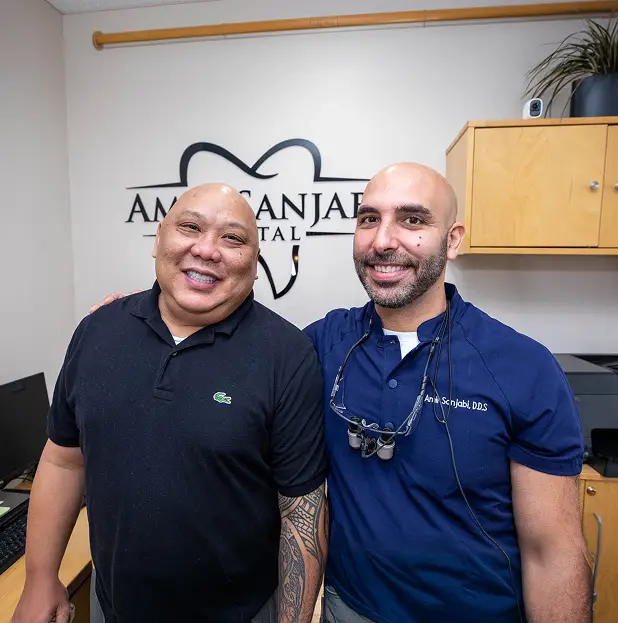

7500+
implants placed
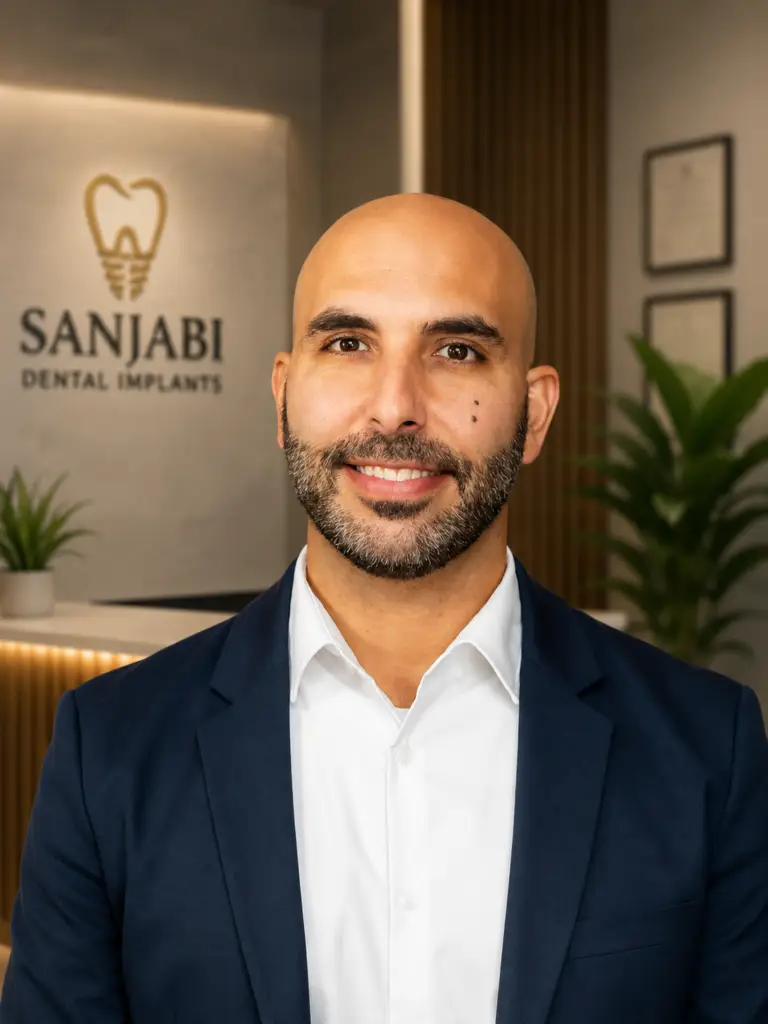

Meet Dr. Sanjabi
Owner of Amir Sanjabi Dental
Bone grafting is an additional step and adds to the overall cost. It is factored into your full treatment plan at your consultation, so there are no surprises.
Financing is available through CareCredit, Proceed Finance, Cherry, Alphaeon, Sunbit, and LendingClub. Many patients finance the full treatment as one plan, grafting included.
Additional costs may apply for sinus lifts, IV sedation, or dental implants beyond 4 per arch.